
Festival
Ahoi Ashtami
अहोई अष्टमी
Krishna paksha Ashtami of Ashvina (Kartika in the North Indian, purnimanta calendar).
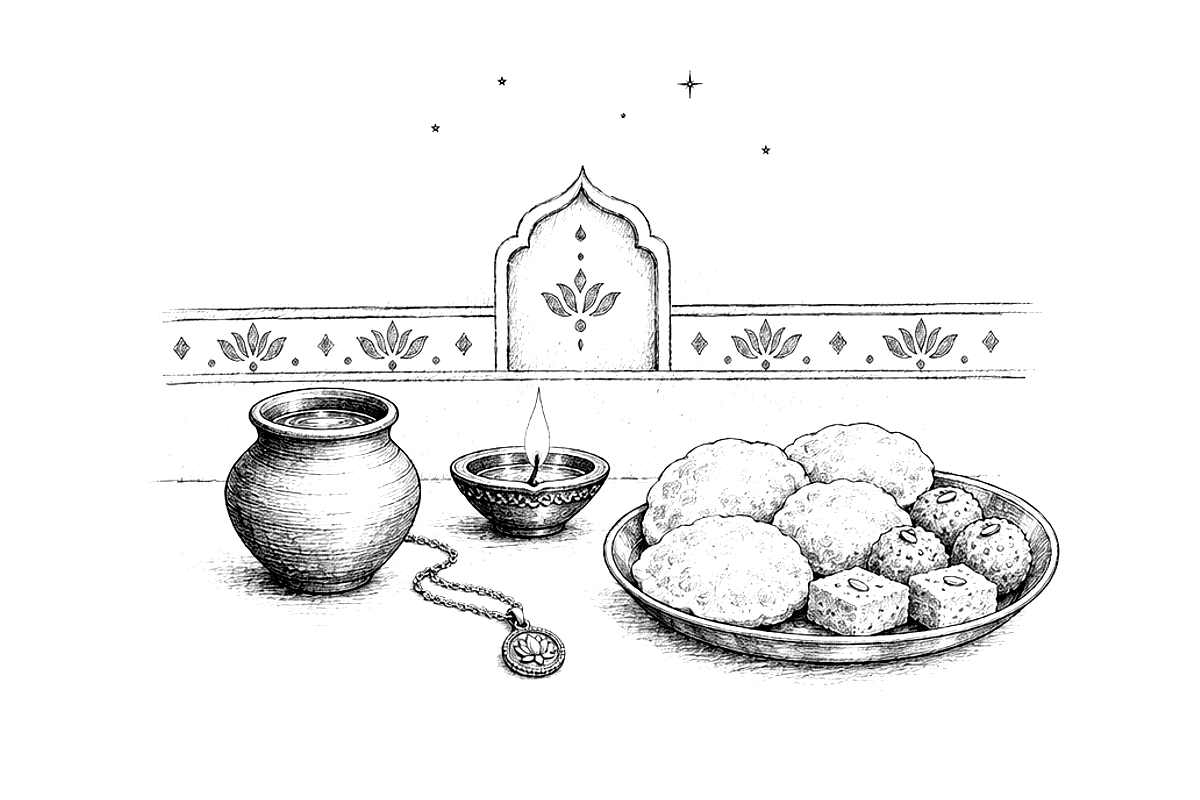
Ahoi Ashtami dates
- 2026
- Sunday, 1 November 2026
- 2027
- Friday, 22 October 2027
Dates for Delhi. A tithi can begin and end at different times in different places, so a festival can fall a day apart; the panchang for your city shows the tithi day by day.
About Ahoi Ashtami
Ahoi Ashtami falls on Krishna Ashtami of Kartika in the purnimanta calendar (Ashvina in the amanta calendar), four days after Karva Chauth and eight days before Diwali. Mothers fast through the day for the well-being of their children, worship an image of Ahoi Mata drawn with a porcupine (sehi) and its cubs, and break the fast in the evening after offering water to the stars, or in some families to the late-rising moon.
Significance
Ahoi Mata, a form of Parvati, is worshipped as the protector of children. The vrat is a mother's prayer for the long life, health and happiness of her children; women who long for a child keep it too, and its story reminds families to treat every living creature with care.
Puja vidhi
Ahoi Ashtami Puja
The worship of Ahoi Mata by mothers on Ahoi Ashtami, done in the evening before the stars appear, followed by the offering of water to the stars and the breaking of the fast.
Ahoi Ashtami, Kartika Krishna Ashtami, evening at the sighting of the stars · About 45 minutes
- 1Wake before sunrise, bathe and take the sankalpa for the vrat, praying for the well-being of your children.
- 2Keep the fast through the day. Traditionally it is nirjala, without food or water, until the stars appear; by custom, the elderly, pregnant women and those with health conditions often keep a lighter fast with water, milk or fruit.
- 3In the afternoon, draw Ahoi Mata on a clean wall with geru (red ochre), within an eight-cornered frame, with the sehi (porcupine) and its cubs beside her; or hang a printed Ahoi Mata picture.
- 4Place a chowki before the image and set a kalash or karva of water on it, with mauli tied around its neck. Many families use the karva kept from Karva Chauth.
- 5If it is your family's custom, place the silver Ahoi pendant (syau) with its beads on the thali; a bead is added for each child, and the pendant is worshipped and then worn until Diwali.
- 6Light a ghee lamp and incense before Ahoi Mata.
- 7Offer roli, haldi, akshat, flowers and a little milk and rice to Ahoi Mata and to the sehi and its cubs.
- 8Offer naivedya of puris, puas or halwa, and fruits; keep aside a portion as the baya for your mother-in-law.
- 9Hold seven grains of wheat in your hand and listen to the Ahoi Ashtami katha told by an elder.
- 10Perform the aarti "Jai Ahoi Mata" with the lamp.
- 11Give the baya with dakshina to your mother-in-law or an elder woman and touch her feet for her blessings.
- 12When the stars appear, offer arghya of water from the kalash to them with roli and akshat. In families that wait for the moon, offer arghya at moonrise instead.
- 13Break the fast with the prasad and a sattvik meal. In some families the water of the karva is kept and sprinkled through the home on Diwali.
Ahoi Mata is asked to guard the children of the home, as she guards the young of every creature. The mother's day-long fast and her evening prayer to the stars express a love that asks nothing for itself.
Puja samagri
- Geru (red ochre), or a printed picture of Ahoi Mata
- Chowki with a clean cloth
- Kalash or karva with water
- Roli or kumkum, haldi and akshat (unbroken rice)
- Mauli (sacred red thread)
- Silver Ahoi pendant (syau) with beads, if it is the family custom
- Ghee lamp, cotton wicks and incense sticks
- Flowers
- Milk and rice
- Seven grains of wheat
- Puris, puas or halwa
- Fruits
- Baya for the mother-in-law, with dakshina