
Festival
Chhath Puja
छठ पूजा
Shukla paksha Shashthi of Kartika.
Chhath Puja dates
- 2026
- 13 November to Monday, 16 November 2026 (main day Sunday, 15 November 2026)
- 2027
- 2 November to Friday, 5 November 2027 (main day Thursday, 4 November 2027)
Dates for Delhi. A tithi can begin and end at different times in different places, so a festival can fall a day apart; the panchang for your city shows the tithi day by day.
About Chhath Puja
Chhath is a four-day observance from the Chaturthi to the Saptami of the bright fortnight of Kartika, in October or November, six days after Diwali: Nahay-Khay, Kharna, the evening arghya to the setting Sun on Shashthi and the morning arghya to the rising Sun on Saptami. The vratin keeps a fast without water for about thirty-six hours and stands in a river or pond to make the offerings; it is the great festival of Bihar, Jharkhand, eastern Uttar Pradesh and the Nepal Terai, and a smaller Chaiti Chhath is kept in Chaitra.
Significance
Chhath gives thanks to Surya, the visible source of life, and to Chhathi Maiya, who protects children and grants health and progeny. It has no idol and needs no priest; its worship lies in strict purity, a demanding fast, and offerings made with the family's own hands, honouring the setting Sun as well as the rising one.
Puja vidhi
Chhath Arghya Vidhi
The four days of the Chhath vrat as kept in a household, from Nahay-Khay to the morning arghya and parana. Sunset and sunrise times for the arghya come from your local panchang. Customs differ between families and regions.
Chhath, Kartika Shukla Chaturthi to Saptami; arghya at sunset on Shashthi and sunrise on Saptami · About 90 minutes
- 1Before Chhath, clean the whole home thoroughly, and keep all cooking for the vrat separate and pure. Many families cook the offerings on a new clay chulha with mango wood.
- 2Day one, Nahay-Khay (Chaturthi): the vratin bathes, in a river if possible, and eats one simple meal cooked in purity, traditionally rice, chana dal and bottle gourd with rock salt and ghee, without onion or garlic.
- 3Day two, Kharna (Panchami): the vratin fasts through the day without water. In the evening they cook rasiya (rice and jaggery kheer) and wheat rotis, offer them to Chhathi Maiya, and eat the prasad in quiet. The family then takes the prasad, and the fast without water begins for about thirty-six hours.
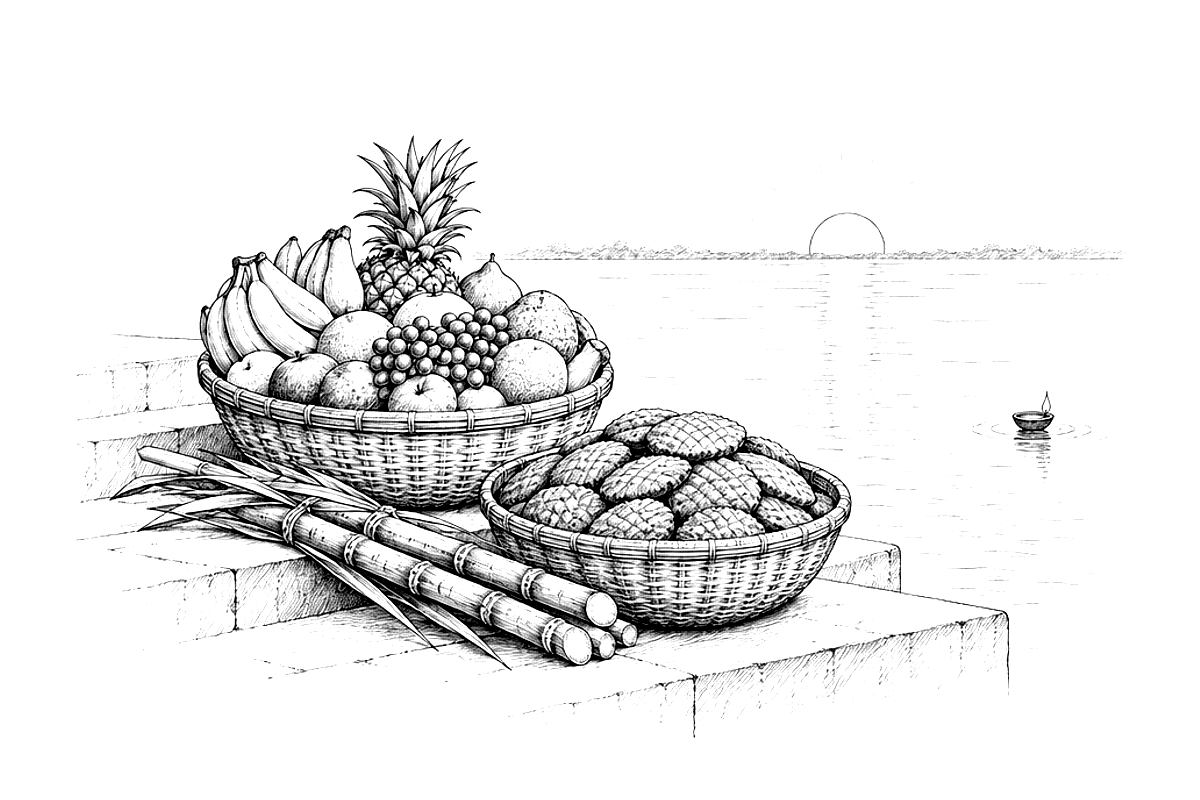
- 4Day three (Shashthi): prepare the offerings: thekua of wheat flour, jaggery and ghee, rice-flour laddoos (kasar), and seasonal fruits and produce such as sugarcane, banana, coconut, citrus, radish and fresh turmeric. Arrange them in bamboo soops and a basket (daura).
- 5In the afternoon, the family carries the daura to the ghat, often on the head of a male member of the family, singing Chhath songs on the way. Women apply long sindoor from the nose to the parting of the hair.
- 6At the ghat, light lamps and set out the soops. The vratin bathes and stands in the water facing west.
- 7As the Sun sets, offer the evening arghya: the vratin holds up each soop while family members pour milk and water over it from a lota, offering it to the setting Sun with prayers to Surya and Chhathi Maiya.
- 8Return home with the offerings. Many families do Kosi Bharai at night, setting earthen lamps beneath a canopy of sugarcane stalks in fulfilment of a vow.
- 9Day four (Saptami): before dawn, return to the ghat with the daura, light the lamps again, and the vratin stands in the water facing east.
- 10As the Sun rises, offer the morning arghya in the same way, with milk and water poured over the soops, praying for the family, the children and the harvest.
- 11Pray to Chhathi Maiya and ask forgiveness for any mistakes in the vrat. Recite the Surya Ashtakam or sing the morning Chhath songs, and listen to the Chhath katha.
- 12Distribute the prasad of thekua and fruits at the ghat; it is considered a blessing to receive it.
- 13The vratin breaks the fast (parana) with water, a little ginger and the prasad, and then a simple meal. Elders of the family touch the vratin's feet or receive their blessing, as is the custom.
Standing in water to offer arghya to the setting and then the rising Sun gives thanks for the whole cycle of life. The strict fast, the purity of the offerings and the shared labour of the family are themselves the worship, offered to Surya and Chhathi Maiya for the health of the children and the welfare of all.
Puja samagri
- Bamboo soops and a bamboo basket (daura)
- Thekua: wheat flour, jaggery and ghee
- Rice flour and jaggery for kasar laddoos
- Rice, jaggery and milk for the Kharna rasiya
- Sugarcane stalks
- Bananas, coconuts and citrus fruit
- Radish, fresh turmeric and ginger plants, and other seasonal produce
- Earthen lamps, ghee and cotton wicks
- Milk and a copper or brass lota for the arghya
- Orange sindoor
- New, clean clothes for the vratin
- A new clay chulha and mango wood, if that is your family's custom
Aartis and kathas
All festivalsPanchang for November 2027Every aarti and katha