
Festival
Dev Uthani Ekadashi
देवउठनी एकादशी
Shukla paksha Ekadashi of Kartika.
Dev Uthani Ekadashi dates
- 2026
- Friday, 20 November 2026
- 2027
- Tuesday, 9 November 2027
Dates for Delhi. A tithi can begin and end at different times in different places, so a festival can fall a day apart; the panchang for your city shows the tithi day by day.
About Dev Uthani Ekadashi
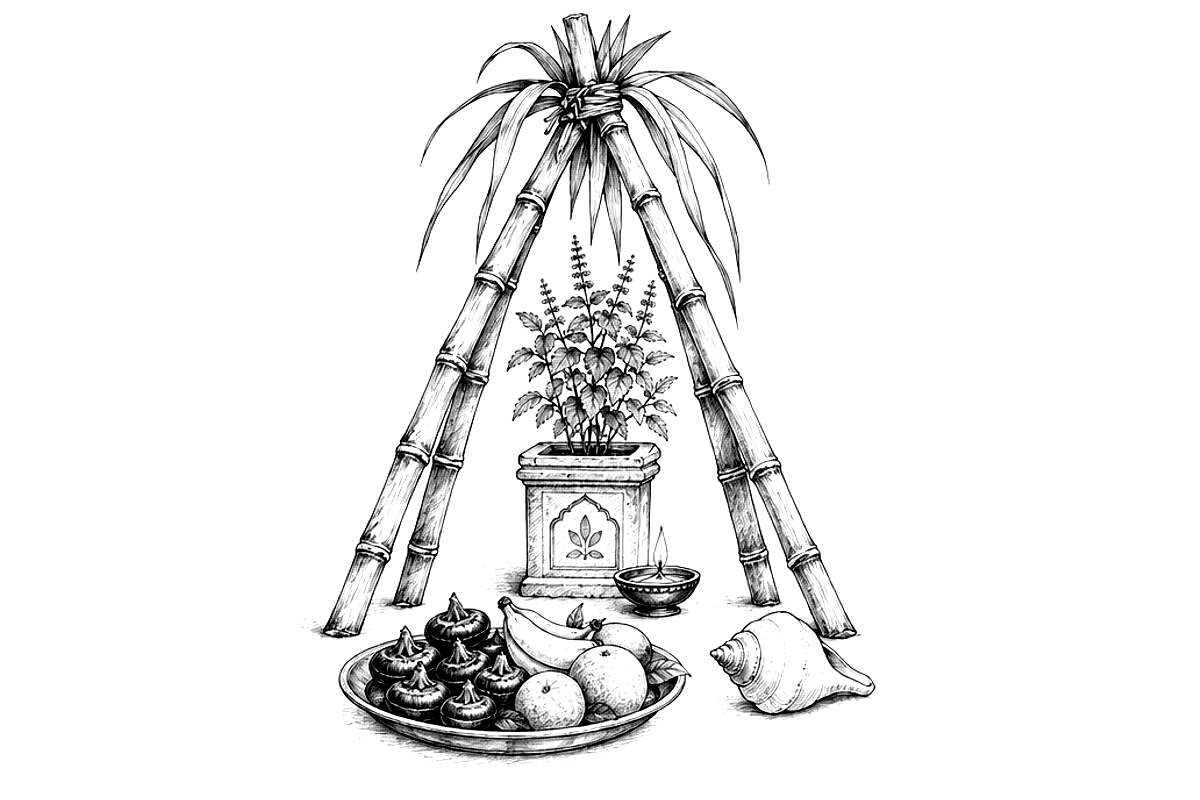
Dev Uthani Ekadashi, also called Prabodhini Ekadashi, falls on Shukla Ekadashi of Kartika and ends Chaturmas, the four months during which Vishnu rests in yoga-nidra. Devotees fast, draw the Lord's feet in the courtyard, gather the season's sugarcane, water chestnuts and sweet potatoes, and in the evening wake the Lord with conch, bells and traditional songs.
Significance
Vishnu's waking marks the return of the auspicious season: weddings, griha pravesh and other samskaras resume from this day. The Puranas praise this Ekadashi fast above many others, and many homes perform Tulsi Vivah the same evening or the next day.
Puja vidhi
Dev Uthani Ekadashi Puja
The household worship of Vishnu on Prabodhini Ekadashi, ending in the evening with the ceremony of waking the Lord from his four-month rest, and the breaking of the fast (parana) on Dwadashi morning.
Dev Uthani Ekadashi, Kartika Shukla Ekadashi, through the day and at dusk · About 60 minutes
- 1Wake early, bathe and take the sankalpa for the Ekadashi vrat.
- 2Keep the Ekadashi fast as your family's custom directs: most avoid all grains and eat only fruit, milk and sattvik phalahar, and some keep a nirjala fast. By custom, the elderly, pregnant women and those with health conditions often keep a lighter fast.
- 3Clean the courtyard or puja space and draw the Lord's footprints with rice-flour paste or chalk and geru, leading from the door towards the place of worship.
- 4Set up a chowki with a yellow cloth and place on it an image of Vishnu or a Shaligram. Tie four sugarcane stalks together above it to make a canopy (mandap).
- 5Bathe the Shaligram or image with panchamrit, then with clean water, and dry it.
- 6Offer a yellow cloth, sandalwood paste, akshat, yellow flowers and tulsi leaves, chanting "Om Namo Bhagavate Vasudevaya".
- 7Place the season's produce before the Lord: sugarcane pieces, water chestnuts (singhara), sweet potatoes, ber, amla and jaggery. In many homes these are covered with a sieve or a basket until the waking.
- 8At dusk, light a ghee lamp and incense before the Lord, and light eleven diyas at the threshold, in the courtyard and beside the tulsi.
- 9Wake the Lord: blow the conch, ring the bell and tap the sieve or a plate gently, singing the traditional verses that begin "Utho Deva, baitho Deva" or reciting the Sanskrit verse that begins "Uttishtha Govinda".
- 10Offer naivedya of fruits, the season's produce, grain-free sweets and panchamrit with tulsi.
- 11Perform the aarti with the lamp, and read or listen to the Dev Uthani Ekadashi katha.
- 12If you can, stay awake for part of the night singing bhajans and the names of Vishnu.
- 13On Dwadashi morning, break the fast (parana) within the time given in your local panchang, after offering food to the Lord and giving food or dakshina to someone in need.
Waking the Lord welcomes Vishnu back into the life of the home and opens the season of new beginnings. The fast and the night of devotion are offered for purity of heart, and the season's first harvest is shared with the Lord before the family eats it.
Puja samagri
- Image of Vishnu or a Shaligram
- Chowki with a yellow cloth
- Four sugarcane stalks for the canopy
- Seasonal produce: water chestnuts (singhara), sweet potatoes, ber, amla and jaggery
- Sieve or bamboo basket
- Rice flour or chalk, and geru, for drawing the footprints
- Panchamrit: milk, curd, ghee, honey and sugar
- Tulsi leaves
- Yellow cloth, yellow flowers and sandalwood paste
- Roli and akshat (unbroken rice)
- Clay diyas (eleven or more), ghee and cotton wicks
- Incense sticks and camphor
- Conch and bell
- Fruits and grain-free sweets
Aartis and kathas
All festivalsPanchang for November 2027Every aarti and katha