
Festival
Dussehra (Vijayadashami)
दशहरा (विजयादशमी)
Shukla paksha Dashami of Ashvina.
Dussehra (Vijayadashami) dates
- 2026
- Tuesday, 20 October 2026
- 2027
- Saturday, 9 October 2027
Dates for Delhi. A tithi can begin and end at different times in different places, so a festival can fall a day apart; the panchang for your city shows the tithi day by day.
About Dussehra (Vijayadashami)
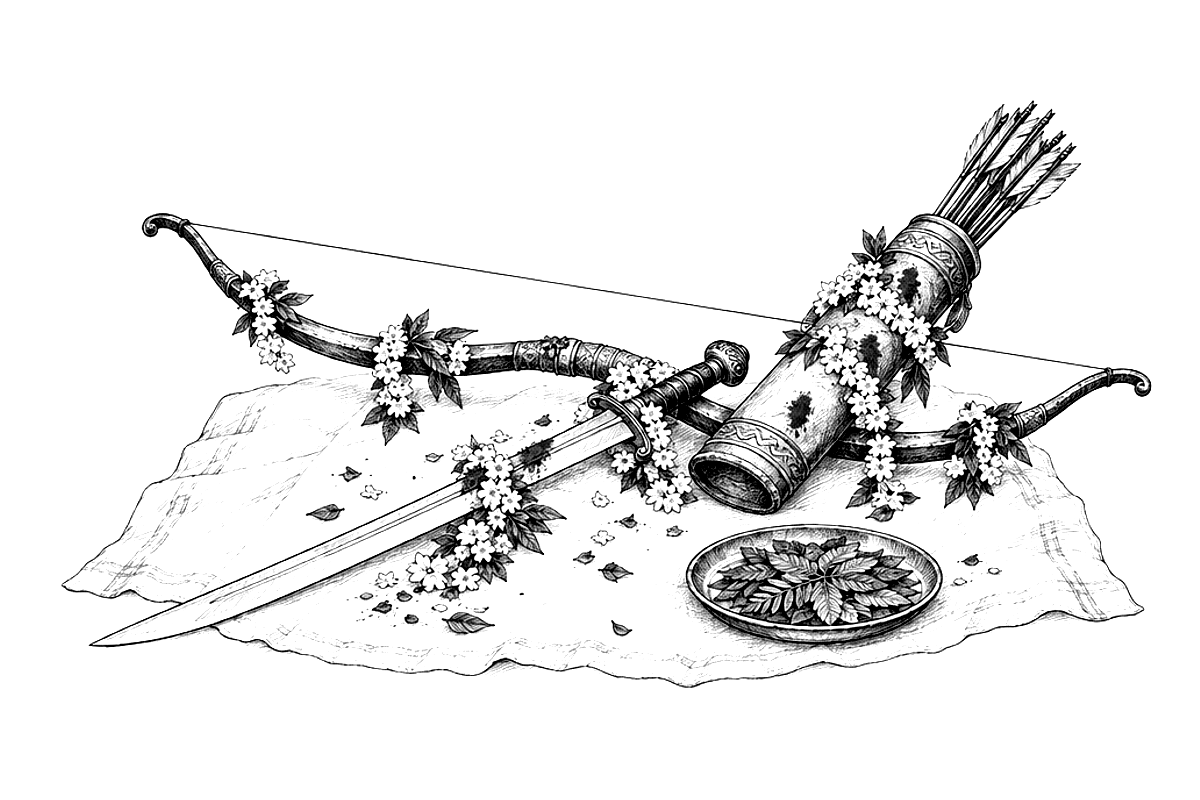
Dussehra, or Vijayadashami, falls on Ashvina Shukla Dashami, the tenth day of the bright half of Ashvina, right after the nine nights of Sharad Navratri. Customs differ by region: North India stages the Ramlila and burns effigies of Ravana at dusk; Bengal and eastern India close Durga Puja with sindoor khela and the immersion of the Goddess; Mysuru holds its Dasara procession for Chamundeshwari; Maharashtra worships the shami or apta tree and exchanges its leaves as gold. Across India people worship Aparajita, their tools and weapons, and begin new undertakings in the afternoon (aparahna) muhurat.
Significance
The day celebrates two victories of good over evil: Rama's defeat of Ravana in the Ramayana, and Durga's slaying of Mahishasura in the Devi Mahatmya. The Mahabharata adds that the Pandavas recovered their weapons from the shami tree, so the day is held to be one of the most auspicious of the year for starting anything new.
Puja vidhi
Dussehra Aparajita and Shami Puja
The household worship on Vijayadashami of the goddess Aparajita, of the tools of one's livelihood and of the shami tree, done in the aparahna (afternoon) muhurat shown in your local panchang.
Dussehra (Vijayadashami), Ashvina Shukla Dashami, at aparahna · About 60 minutes
- 1In the morning, bathe and wear clean clothes. If you kept Navratri, conclude it: worship the kalash, take the sprouted barley (jaware) as a blessing, and immerse what remains as your family custom holds.
- 2Clean and arrange the tools of your livelihood: books, pens, instruments, tools, weapons or vehicles. (In South India Ayudha Puja is done on Navami and these are taken up again today.)
- 3In the afternoon muhurat, clean a spot to the north-east of the home and draw an eight-petalled lotus with kumkum or rice flour.
- 4Sit facing east or north, sip water three times (achamana) and take the sankalpa, stating your name, the date and place, and your prayer for victory over obstacles.
- 5Remember Ganesha with a flower and akshat, chanting "Om Gam Ganapataye Namah".
- 6Invite the goddess Aparajita into the centre of the lotus, with Jaya on her right and Vijaya on her left. Offer water, kumkum, akshat, flowers (aparajita flowers if you have them) and a lamp, chanting "Om Aparajitayai Namah".
- 7Worship your tools and books: apply a roli tilak, tie mauli, and offer akshat and flowers.
- 8Go to a shami tree (or an apta tree, as in Maharashtra). Offer water, roli, akshat, flowers and a lamp at its root, and pray: "Shami shamayate papam, shami shatru-vinashini; Arjunasya dhanurdhari, Ramasya priyadarshini".
- 9Walk around the tree, and with its permission gather a few leaves; take fallen leaves where you can.
- 10Where the custom is kept, walk a short way beyond the edge of your village or neighbourhood and return (seemollanghan).
- 11Offer the leaves before the deity, then give them to elders, friends and neighbours as "gold", touching the feet of elders for their blessing.
- 12In the evening, worship Rama, sing "Shri Ramchandra Kripalu" and perform the aarti; watch the Ramlila or the burning of Ravana if it is held nearby.
- 13Share sweets and the festive meal, and begin something new, such as a lesson, a book or a venture, on this auspicious day.
Aparajita, "the unconquered", is worshipped for success in every undertaking, and the shami for the victory it brought Arjuna and Rama. Worshipping one's tools gives thanks for one's livelihood, and exchanging leaves as gold wishes friends and elders prosperity in the year ahead.
Puja samagri
- Kumkum or rice flour for drawing the lotus
- Roli, haldi and akshat
- Flowers and a marigold garland
- Aparajita (butterfly pea) flowers, if available
- Mauli (sacred red thread)
- Lota of water
- Ghee lamp, incense sticks and camphor
- Shami or apta leaves
- Books, tools, instruments or vehicles to be worshipped
- Coconut
- Betel leaves and supari
- Sweets and fresh fruits
- Image or picture of Rama, and of Durga