
Festival
Ganesh Chaturthi
गणेश चतुर्थी
Shukla paksha Chaturthi of Bhadrapada.
Ganesh Chaturthi dates
- 2026
- Monday, 14 September 2026
- 2027
- Saturday, 4 September 2027
Dates for Delhi. A tithi can begin and end at different times in different places, so a festival can fall a day apart; the panchang for your city shows the tithi day by day.
About Ganesh Chaturthi
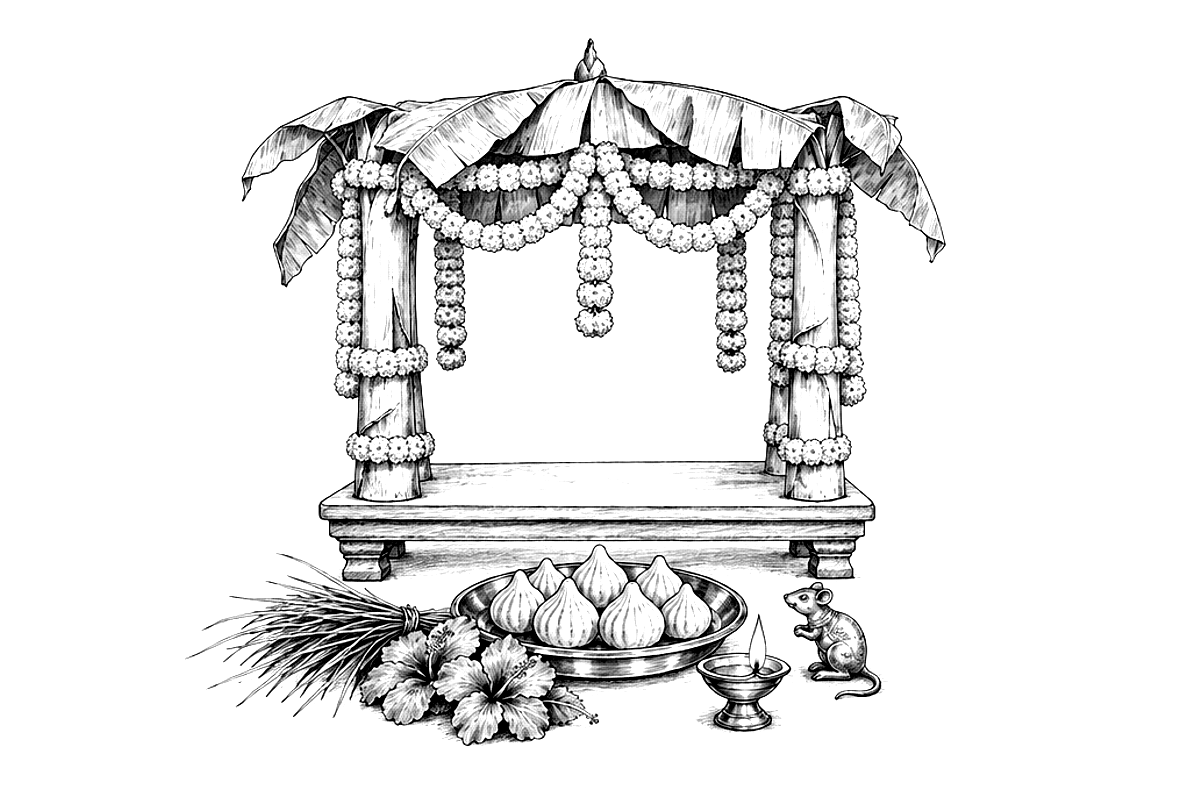
Ganesh Chaturthi falls on the Shukla Chaturthi of Bhadrapada, in August or September. Families install a clay image of Ganesha at home during the madhyahna (midday) muhurat, worship him with durva, red flowers and modaks, and keep him as an honoured guest for one and a half, three, five, seven or ten days, according to family custom, before the visarjan; the ten-day festival ends on Anant Chaturdashi.
Significance
The day celebrates the birth of Ganesha, created by Parvati and made by Shiva the leader of the ganas and the deity worshipped first in every undertaking. Devotees avoid looking at the moon on this night because of Ganesha's curse; the festival's public form, the sarvajanik Ganeshotsav, was popularised in Maharashtra in the 1890s.
Puja vidhi
Ganesh Chaturthi Sthapana Puja
The installation (sthapana) and first worship of the clay Ganesha at home on Bhadrapada Shukla Chaturthi, done during the madhyahna muhurat shown in your local panchang, followed by daily aarti until the visarjan.
Ganesh Chaturthi, Bhadrapada Shukla Chaturthi, in the madhyahna (midday) muhurat · About 90 minutes
- 1Before the day, bring home a clay (shadu or unbaked earth) image of Ganesha, preferably eco-friendly and with his trunk turned to his left, and prepare a clean, decorated place facing east or north.
- 2On the day, bathe, wear clean clothes and set up a chowki with a red or yellow cloth. Spread a little rice on it and place the image there, keeping its face covered until the prana pratishtha.
- 3Place a kalash of water with mango leaves and a coconut beside the chowki, and a ghee lamp that will be kept burning as long as possible during the festival.
- 4Sit facing the image, sip water three times (achamana) and take the sankalpa: your name, gotra, date and place, and the number of days you will keep Ganesha at home.
- 5Perform the prana pratishtha: uncover the face, touch the image with a durva and invite Ganesha to reside in it, chanting "Om Gam Ganapataye Namah" or the avahan mantra your priest or puja book gives.
- 6Offer the sixteen upacharas (shodashopachara) in brief: a seat, water for the feet and hands, water to sip, a bath (a few drops of water or panchamrit sprinkled on the clay image), a cloth or janeu, sandalwood paste, akshat and sindoor or kumkum.
- 7Offer red flowers such as hibiscus, a garland, shami leaves if available, and twenty-one blades of durva grass in bunches of two or three, naming Ganesha with each offering.
- 8Light incense and the lamp, then offer naivedya: twenty-one modaks (or laddoos), a coconut, bananas and other fruit, and a betel leaf with supari.
- 9Read or listen to the Ganesh Chaturthi katha, and chant the Ganapati Atharvashirsha or "Om Gam Ganapataye Namah" 108 times.
- 10Perform the aarti with a ghee lamp, singing "Sukhakarta Dukhaharta" and "Jai Ganesh Deva", followed by mantra pushpanjali and a pradakshina of the image.
- 11Avoid looking at the moon on this night. If you see it by mistake, read or listen to the story of the Syamantaka jewel.
- 12Each day that Ganesha stays, offer fresh durva, flowers and naivedya and perform the aarti morning and evening.
- 13On the day of visarjan (one and a half, three, five, seven or ten days, or Anant Chaturdashi), perform a final puja and aarti, offer curd-rice or modaks, and ask Ganesha to return next year ("Ganpati Bappa Morya, pudhchya varshi lavkar ya").
- 14Immerse the clay image respectfully in a natural water body or, to protect rivers and lakes, in a bucket or tub of water at home, and later pour the dissolved clay into a garden or plant pot.
Ganesha is welcomed into the home as a beloved guest, worshipped with his favourite durva and modaks, and given a warm farewell at the visarjan, which teaches that every form returns to the elements while the Lord remains. As the remover of obstacles he is asked to bless the family's work and studies through the coming year.
Puja samagri
- Clay (shadu) image of Ganesha
- Chowki with a red or yellow cloth, and decorations for the mandap
- Kalash, mango leaves and coconut
- Rice (akshat), roli or kumkum, sindoor, haldi and sandalwood paste
- Janeu (sacred thread) and a small cloth for Ganesha
- Durva grass (at least twenty-one blades) and shami leaves
- Red flowers (hibiscus) and a garland
- Panchamrit: milk, curd, ghee, honey and sugar
- Ghee lamp, cotton wicks, incense sticks and camphor
- Twenty-one modaks or laddoos
- Coconut, bananas and seasonal fruit
- Betel leaves, supari, cloves and cardamom
- Bell and an aarti thali
- Bucket or tub of water for home visarjan
Aartis and kathas
All festivalsPanchang for September 2027Every aarti and katha