
Festival
Guru Purnima
गुरु पूर्णिमा
Shukla paksha Purnima of Ashadha.
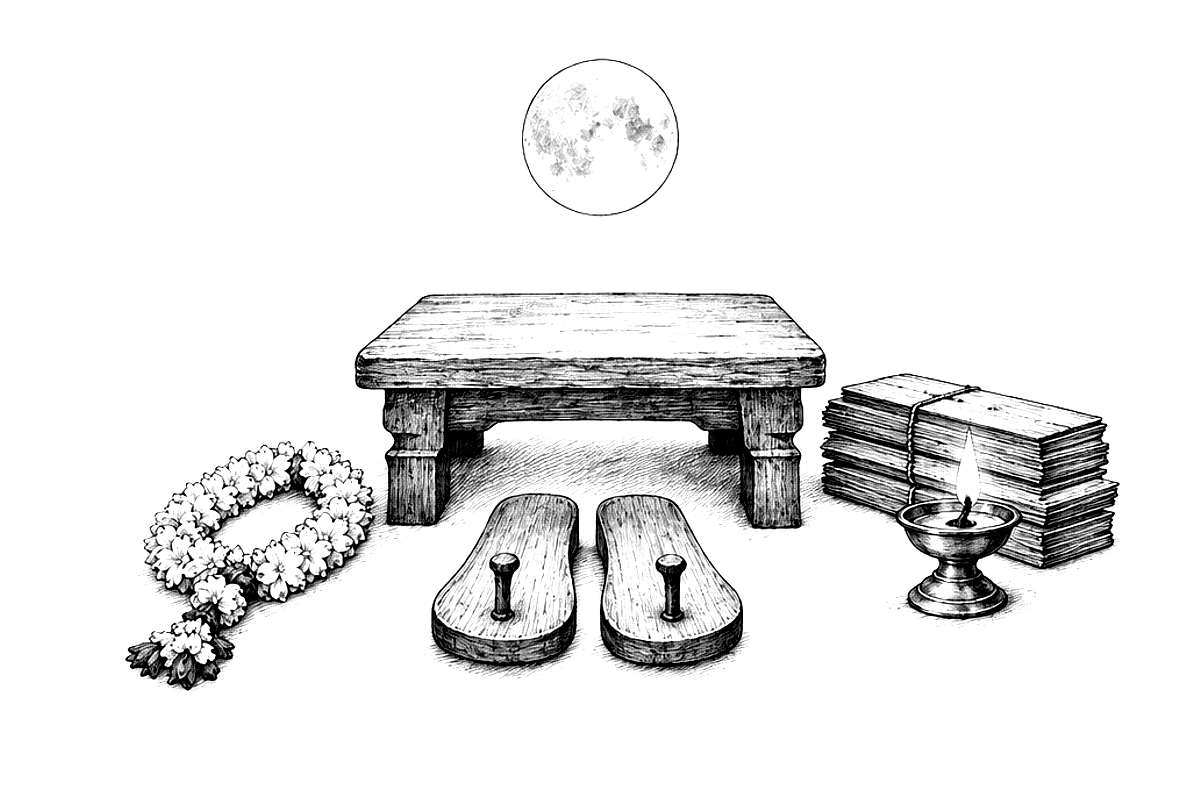
Guru Purnima dates
- 2026
- Wednesday, 29 July 2026
- 2027
- Sunday, 18 July 2027
Dates for Delhi. A tithi can begin and end at different times in different places, so a festival can fall a day apart; the panchang for your city shows the tithi day by day.
About Guru Purnima
Guru Purnima, also called Vyasa Purnima, falls on Ashadha Purnima, the full moon of Ashadha. Disciples worship their guru or the guru's padukas, students honour their teachers with gifts and dakshina, and sannyasis perform Vyasa Puja and begin Chaturmasya, the four months of staying in one place for study and sadhana. Ashrams and maths hold satsang, and many visit their guru or a temple of Vyasa or Dakshinamurti.
Significance
The day honours Veda Vyasa, born on this full moon, who arranged the Vedas and composed the Mahabharata, and through him every teacher who removes the darkness of ignorance. The word guru is traditionally explained as "one who dispels darkness", and the day is for gratitude to all who have taught us and for renewing our own commitment to learning.
Puja vidhi
Guru Purnima Guru Puja
The household worship of Vyasa and one's own guru on Guru Purnima morning, with offerings to living teachers.
Guru Purnima, Ashadha Purnima, morning · About 60 minutes
- 1Bathe at sunrise and wear clean white or yellow clothes.
- 2Set up a seat (vyasa peetha) with a clean cloth, and place on it an image of Veda Vyasa and of your own guru or guru-parampara, or the guru's padukas. Many also place a picture of Dakshinamurti or Adi Shankaracharya.
- 3Sit facing the seat, sip water three times (achamana) and take the sankalpa: to honour Vyasa, your guru and every teacher who has guided you.
- 4Remember Ganesha with a flower and "Om Gam Ganapataye Namah".
- 5Meditate briefly on your guru, then chant "Gurur Brahma Gurur Vishnuh, Gururdevo Maheshvarah, Guruh sakshat Parabrahma, tasmai Shri Gurave Namah".
- 6Worship the image or padukas: offer water to wash the feet, then chandan, akshat, flowers and a garland, and place a new cloth before them.
- 7Light a ghee lamp and incense sticks, and offer fruits and sweets as naivedya.
- 8Recite the Guru Stotram, and chant "Om Shri Vyasaya Namah" or "Om Shri Gurave Namah" 108 times.
- 9Perform the aarti with the lamp, offer flowers with folded hands, and ask forgiveness for any mistakes.
- 10If your guru or teacher is living, visit them, bow at their feet and offer fruit, cloth, books or dakshina as you are able. Thank your school teachers, music or dance gurus and parents too.
- 11Read a passage from the Bhagavad Gita, the Bhagavata or your guru's teachings; study is the offering a guru values most.
- 12Feed the needy or serve in an ashram or temple, and share the prasad.
- 13Take a small vow of study, japa or service for the Chaturmasya months that begin now.
Worshipping the guru's feet expresses gratitude and surrender to the one who shows the way to truth. Honouring Vyasa honours the whole line of teachers through whom the Vedas and the epics have come down to us.
Puja samagri
- Clean cloth for the guru's seat
- Image of Veda Vyasa and of your guru, or the guru's padukas
- Chandan (sandalwood paste), roli and akshat
- Flowers and a garland
- Tulsi leaves
- New cloth (vastra) for the guru
- Ghee lamp, incense sticks and camphor
- Fresh fruits and sweets
- Dakshina (an offering of money)
- Books or gifts for your teachers
- Bhagavad Gita or your guru's teachings for reading
- A mala for japa