
Festival
Hariyali Teej
हरियाली तीज
Shukla paksha Tritiya of Shravana.
Hariyali Teej dates
- 2026
- Saturday, 15 August 2026
- 2027
- Wednesday, 4 August 2027
Dates for Delhi. A tithi can begin and end at different times in different places, so a festival can fall a day apart; the panchang for your city shows the tithi day by day.
About Hariyali Teej
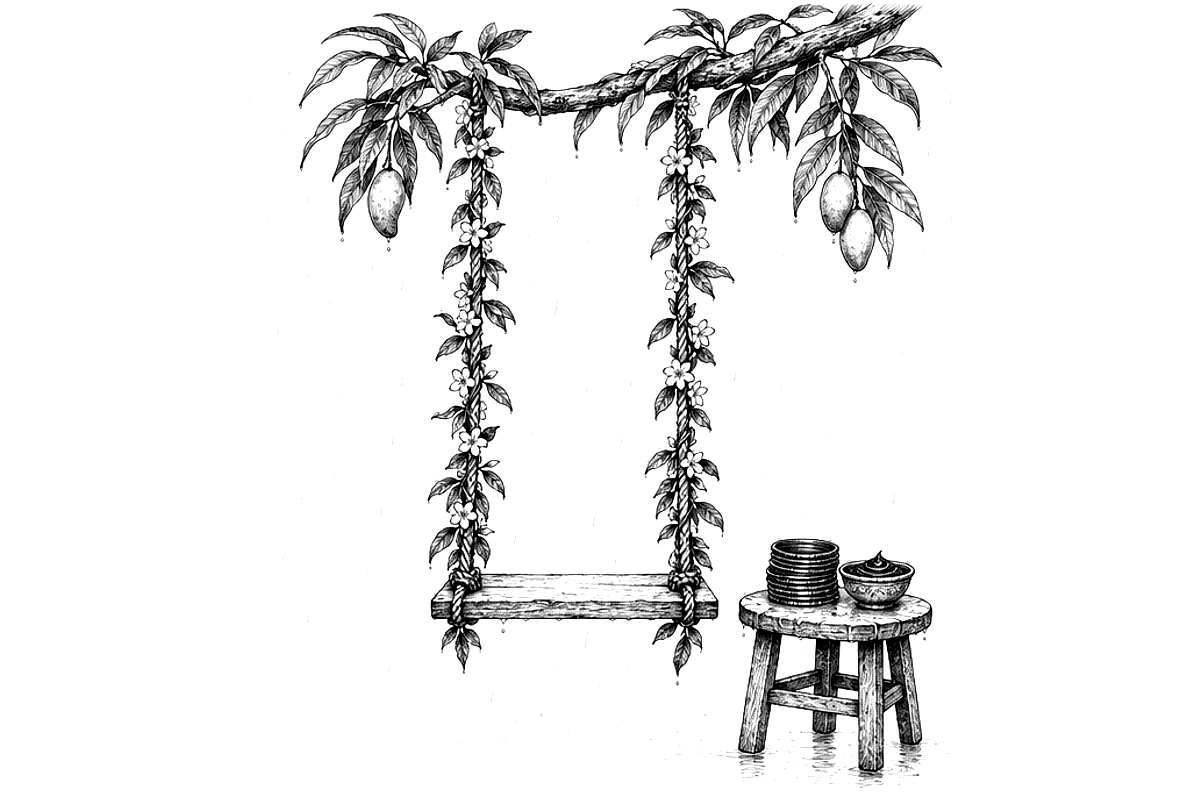
Hariyali Teej, also called Shravani Teej or Sindhara Teej, falls on the Tritiya (third day) of the bright fortnight of Shravana, in July or August, at the height of the monsoon. Women dress in green, apply mehendi, receive sindhara gifts from their parents' home, sing songs of the rains on decorated swings, and worship Shiva and Parvati; many married women fast for the well-being of their husbands, and young women for a good match. It is kept most widely in Rajasthan, Haryana, Uttar Pradesh, Madhya Pradesh and Bihar.
Significance
The day celebrates the reunion of Shiva and Parvati after her long penance, which tradition places on this Tritiya. It honours steadfast love and devotion in marriage, and the greenness of the rains gives it the name Hariyali, the green Teej.
Puja vidhi
Hariyali Teej Puja
The worship of Shiva, Parvati and Ganesha by women on Hariyali Teej, usually in the afternoon or evening, followed by the Teej katha. Fasting customs differ from family to family and region to region.
Hariyali Teej, Shravana Shukla Tritiya, in the afternoon or evening · About 60 minutes
- 1On the day before or the morning of Teej, apply mehendi. Married daughters often receive the sindhara from their parents: clothes, bangles, mehendi, sweets such as ghevar, and other items of adornment.
- 2Bathe in the morning and take the sankalpa for the vrat. Some women keep the fast without water until the puja, others take fruit and milk; follow your family's custom and what your health allows.
- 3In the afternoon or evening, bathe again and dress in green or red, with bangles, sindoor and the full shringar of a married woman.
- 4Set up a chowki with a green or red cloth and place images of Shiva, Parvati and Ganesha on it. Many families shape them from clay or sand for the day.
- 5Worship Ganesha first with roli, akshat, flowers and durva grass.
- 6Worship Shiva with water, sandalwood paste, akshat, bilva leaves, dhatura and white flowers.
- 7Worship Parvati with kumkum, akshat and red flowers, and offer her the items of suhag: a red chunri, bangles, sindoor, bindi, mehendi, kajal and alta.
- 8Offer incense and a ghee lamp, then naivedya: ghevar, kheer or malpua, and fruits.
- 9Sit together with the other women of the family or neighbourhood and listen to the Teej katha of Parvati's penance.
- 10Perform the aarti with a ghee lamp, first "Jai Ganesh Deva" and then "Om Jai Shiv Omkara", and ask forgiveness for any mistakes in the worship.
- 11Offer a plate of suhag items, sweets and a little money (the baya, in Rajasthan) to your mother-in-law or an elder married woman, and touch her feet for her blessing.
- 12Sing Teej songs and kajri and swing on decorated jhoolas with family and friends.
- 13Break the fast after the puja as your family does, sharing the prasad.
Worshipping Shiva and Parvati together on the day of their reunion asks for a marriage as steadfast as theirs. The fast and the katha remind women of Parvati's patience and resolve, and the songs and swings celebrate the life-giving rains.
Puja samagri
- Chowki with a green or red cloth
- Images of Shiva, Parvati and Ganesha, or clay to shape them
- Roli, kumkum, sandalwood paste and akshat
- Bilva leaves and dhatura for Shiva
- Red and white flowers, and durva grass
- Suhag items: red chunri, bangles, sindoor, bindi, mehendi, kajal, alta
- Ghee lamp, cotton wicks, incense and camphor
- Ghevar, kheer or malpua, and fruits
- Green clothes and bangles for the vratin
- A plate of gifts for the baya to an elder
- Bell, and a plate (thali) for the aarti