
Festival
Holika Dahan
होलिका दहन
Shukla paksha Purnima of Phalguna.
Holika Dahan dates
- 2026
- Monday, 2 March 2026
- 2027
- Sunday, 21 March 2027
Dates for Delhi. A tithi can begin and end at different times in different places, so a festival can fall a day apart; the panchang for your city shows the tithi day by day.
About Holika Dahan
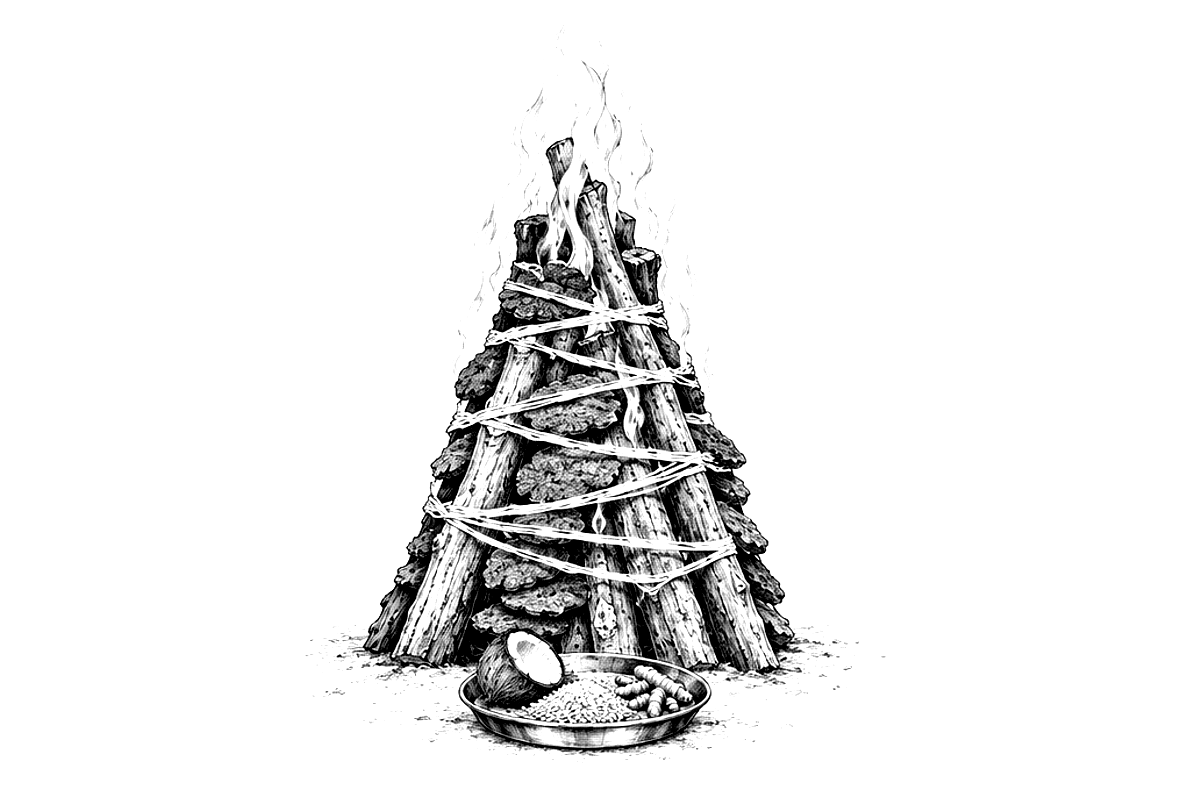
Holika Dahan is the bonfire lit on the evening of Phalguna Purnima, the full moon that ends the month of Phalguna, on the eve of Holi. Communities build a pyre of wood and cow-dung cakes at a crossroads or open ground, worship it during pradosh kaal once Bhadra has passed, walk around it winding raw cotton thread, and roast new wheat or barley in the flames. In South India the night is kept as Kama Dahanam, remembering Shiva burning Kamadeva.
Significance
The fire recalls the story from the Puranas of Holika, who tried to burn the child Prahlada and was herself consumed while he, protected by Vishnu, came out unharmed. It marks the triumph of devotion over arrogance and cruelty, and offering the first grain of the spring harvest to the fire is a thanksgiving for the new crop.
Puja vidhi
Holika Dahan Puja
The worship of the Holika pyre on Phalguna Purnima evening, done by families at the community bonfire before and as it is lit, during pradosh kaal after Bhadra (Vishti karana) has ended, as shown in your local panchang.
Holika Dahan, Phalguna Purnima, during pradosh kaal after Bhadra ends · About 45 minutes
- 1Check your local panchang for the Holika Dahan muhurat: after sunset on Phalguna Purnima, once Bhadra has ended. Avoid lighting the fire during Bhadra.
- 2In the days before, help gather wood and cow-dung cakes, including the small garlands of cow-dung rings (gulari or badkulle) children make. Many places set a green branch in the centre of the pyre to stand for Prahlada.
- 3Bathe, wear clean clothes and prepare a puja thali with water, roli, akshat, flowers, raw cotton thread, turmeric, whole moong, batashe, gulal and a coconut.
- 4At the pyre, sit or stand facing east or north. Sip water three times (achamana) and take the sankalpa, stating your name, the date and place, and your prayer for the family's protection.
- 5Remember Ganesha with a flower and "Om Gam Ganapataye Namah", then remember Narasimha and Prahlada with folded hands.
- 6Worship the pyre: sprinkle water, then offer roli, akshat, flowers, turmeric, moong, batashe and gulal at its base.
- 7Wind the raw cotton thread around the pyre while walking around it clockwise three or seven times.
- 8Pour the remaining water from the lota in a thin stream at the base of the pyre, and place the coconut there.
- 9When the elders or the priest light the fire at the muhurat, many draw out the green Prahlada branch first, recalling how Prahlada came out of the flames unharmed.
- 10Hold ears of new wheat or barley and green chickpeas in the fire to roast them, and take a few home as prasad.
- 11Walk around the burning fire with folded hands, offering grain and praying that every harm and wrong tendency in the family burn away.
- 12Listen to the katha of Prahlada and Holika and sing "Om Jai Jagdish Hare" together.
- 13Bow to elders and share sweets such as gujiya. Many families carry home a little fire or ash; the next morning the cool ash is touched to the forehead as a blessing.
Worshipping the fire asks the Lord to protect the family as he protected Prahlada, and to burn away pride, malice and every harm. Offering the first grain of the spring harvest gives thanks for the crop before it is eaten.
Puja samagri
- Lota of water
- Roli or kumkum, haldi (turmeric) and akshat (unbroken rice)
- Flowers and a garland
- Raw cotton thread (kachcha soot) or mauli
- Whole moong and batashe
- Gulal
- Coconut
- Cow-dung cakes and gulari (cow-dung ring garlands)
- Ears of new wheat or barley, and green chickpeas
- Incense sticks and a ghee lamp
- Gujiya or other sweets for prasad
- A plate (thali) for the puja