
Festival
Nag Panchami
नाग पञ्चमी
Shukla paksha Panchami of Shravana.
Nag Panchami dates
- 2026
- Monday, 17 August 2026
- 2027
- Friday, 6 August 2027
Dates for Delhi. A tithi can begin and end at different times in different places, so a festival can fall a day apart; the panchang for your city shows the tithi day by day.
About Nag Panchami
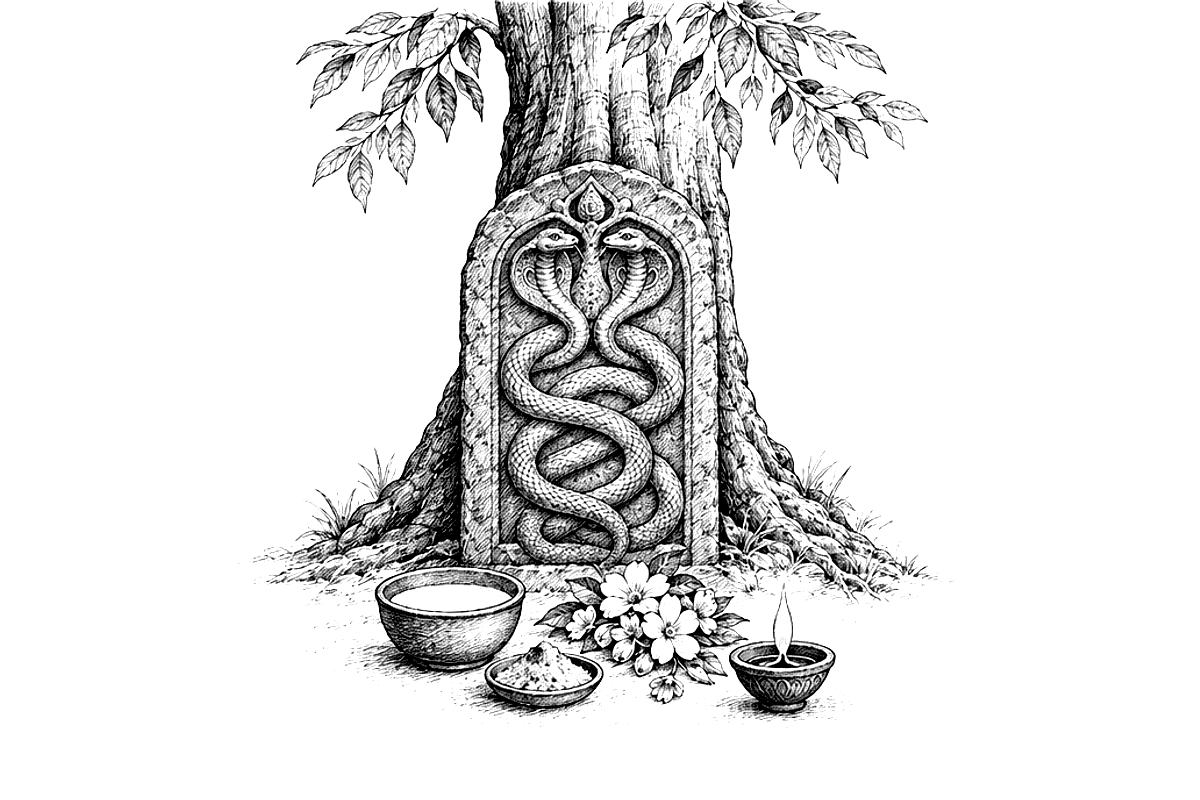
Nag Panchami falls on the Panchami (fifth day) of the bright fortnight of Shravana, in July or August; some communities keep it on the Krishna Panchami a fortnight earlier, and in Bengal the serpent goddess Manasa is worshipped through the monsoon. Families draw or set up images of the nagas, offer them milk, flowers and sweets, and avoid digging or ploughing the earth for the day. In Karnataka and Maharashtra women worship at anthills and snake stones and pray for their brothers' well-being.
Significance
The nagas are honoured as guardians of the earth, the waters and the household; Shesha bears Vishnu, Vasuki encircles Shiva's neck. Worshipping them in the rainy season, when snakes leave their flooded burrows, asks for protection from snakebite and teaches reverence and care for every living creature.
Puja vidhi
Nag Panchami Puja
The household worship of the nagas on Nag Panchami morning, using images drawn at the threshold or on a board, or clay, metal or stone images. Offerings are made to the image, never to live snakes.
Nag Panchami, Shravana Shukla Panchami, in the morning · About 40 minutes
- 1Bathe in the morning and put on clean clothes. For the day, many families avoid digging, ploughing and cutting the earth, and some avoid frying food or using a griddle; follow your family's custom.
- 2Draw images of serpents on the wall beside the main door, or on a wooden board, with sandalwood paste, turmeric, or cow dung and charcoal as is the custom in your region. You may instead use a clay, silver or stone image of the nagas, or worship at a temple, an anthill or a naga stone.
- 3Sit before the image, sip water three times (achamana) and take the sankalpa, praying for the protection of the family.
- 4Offer water, and then raw milk, to the image. Do not offer milk to a live snake: snakes cannot digest it, and the custom of catching them for this harms them.
- 5Offer turmeric, kumkum, sandalwood paste, akshat, flowers and durva grass, and tie a cotton thread around the image or board if that is your family's custom.
- 6Offer incense and a ghee lamp, then naivedya: puffed rice, roasted chana, kheer and sweets prepared without frying where that is the custom.
- 7With folded hands, recite the names of the nine great nagas: "Anantam Vasukim Shesham Padmanabham cha Kambalam, Shankhapalam Dhartarashtram Takshakam Kaliyam tatha".
- 8Pray that no member of the family will suffer from snakebite, and remember your ancestors, for many traditions connect the nagas with the family line.
- 9Read or listen to the Nag Panchami katha.
- 10Perform aarti with a ghee lamp. Many homes also sing the Shiva aarti "Om Jai Shiv Omkara", for the nagas are Shiva's ornaments, and visit a Shiva temple.
- 11In Karnataka and parts of Maharashtra, women pour milk at an anthill and pray for their brothers, and girls play traditional games and swing on jhoolas.
- 12Share the prasad. If you see a snake, let it be or call a trained rescuer; protecting them is part of the day's worship.
Offering milk and flowers to the nagas on the day the rains bring snakes out of the earth is an act of reverence and peace-making. The rite asks for protection for the family and expresses gratitude to the creatures who keep the fields free of pests.
Puja samagri
- Sandalwood paste, turmeric, or cow dung and charcoal for drawing the nagas
- Or a clay, silver or stone image of the nagas
- Raw milk and water
- Turmeric, kumkum and akshat (unbroken rice)
- Flowers and durva grass
- Cotton thread
- Ghee lamp, cotton wicks and incense
- Puffed rice and roasted chana
- Kheer or sweets
- A plate (thali) for the puja and aarti