
Festival
Naraka Chaturdashi
नरक चतुर्दशी
Krishna paksha Chaturdashi of Ashvina (Kartika in the North Indian, purnimanta calendar).
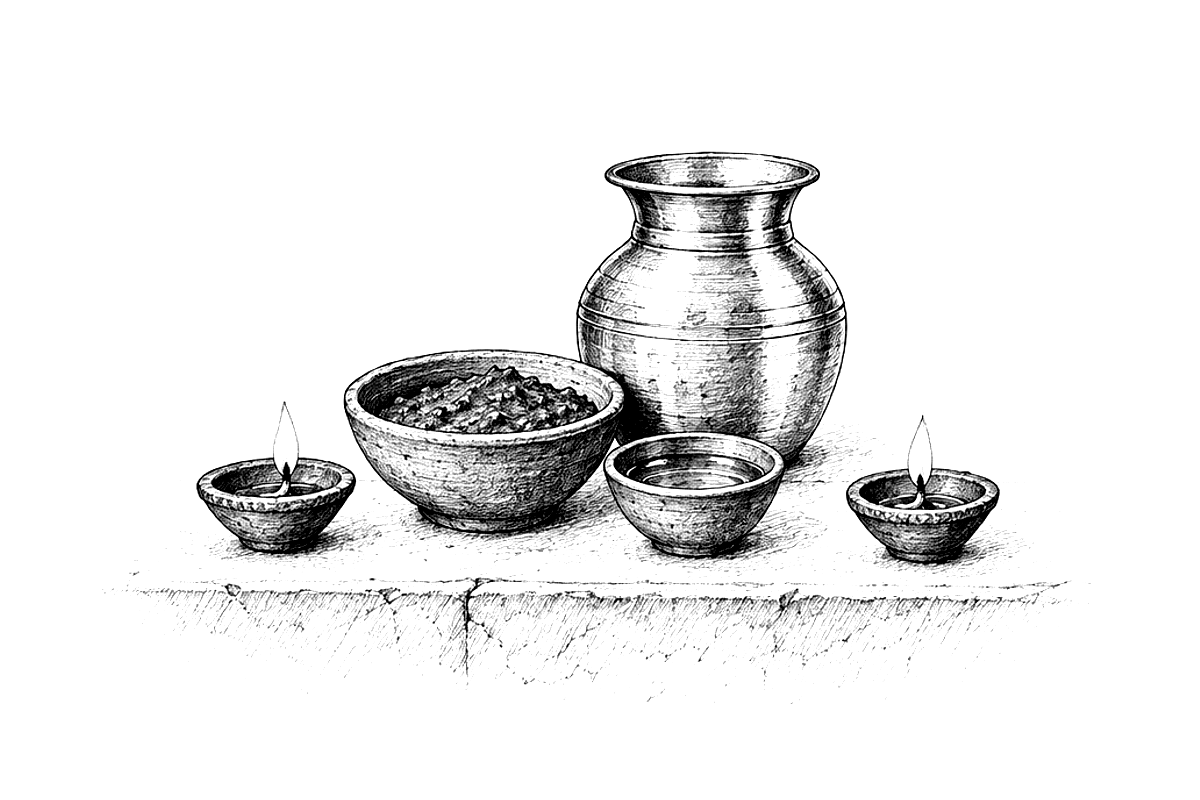
Naraka Chaturdashi dates
- 2026
- Sunday, 8 November 2026
- 2027
- Thursday, 28 October 2027
Dates for Delhi. A tithi can begin and end at different times in different places, so a festival can fall a day apart; the panchang for your city shows the tithi day by day.
About Naraka Chaturdashi
Naraka Chaturdashi falls on the Krishna Chaturdashi of Kartika (Ashvina in the amanta calendar), the day before the Lakshmi Puja of Diwali; it is also called Choti Diwali and Roop Chaturdashi. People rise before dawn for an oil bath (abhyanga snan), wear new clothes, burst crackers and light lamps in the evening, including a lamp for Yama; in South India and Goa this morning is the main Deepavali celebration, and in Bengal the evening is kept as Bhoot Chaturdashi with fourteen lamps.
Significance
The day celebrates Krishna and Satyabhama's victory over Narakasura and the release of the thousands of women he had imprisoned, and Narakasura's last wish that his end be remembered with lights. The pre-dawn bath and the lamps are prayers for purity, beauty and protection from untimely death and from naraka.
Puja vidhi
Naraka Chaturdashi Abhyanga Snan and Deepdaan
The pre-dawn oil bath of Naraka Chaturdashi, taken while the Chaturdashi is current and the moon is still in the sky, before sunrise, followed by worship of Krishna and the lighting of lamps, including a lamp for Yama, in the evening. Local customs differ widely; follow your family's practice.
Naraka Chaturdashi, Kartika Krishna Chaturdashi, before sunrise and in the evening · About 60 minutes
- 1The night before, keep sesame oil, ubtan (a paste of gram flour, turmeric, sandalwood and rose water, or the utane of Maharashtra) and new clothes ready, and light a lamp at the door.
- 2Rise in the brahma muhurta, before sunrise, while it is still dark. Light a lamp in the bathing area.
- 3An elder of the family, often the mother or an elder sister, applies warm sesame oil to each member's head and body and may perform an aarti for them. Massage the oil in well.
- 4Apply the ubtan to the body and rub it off, then bathe with warm water before sunrise. Some wave a sprig of apamarga (chirchita) around the head three times during the bath, as is customary in North India.
- 5In Maharashtra, after the bath, crush a bitter karit fruit under the left foot to recall the defeat of Narakasura, and taste a little of its juice; in Goa, effigies of Narakasura are burned before dawn.
- 6Wear new or freshly washed clothes and apply a tilak. Offer three handfuls of water with black sesame to Yama (Yama tarpan) facing south, saying "Yamaya Namah" or the names your family recites.
- 7Worship Krishna (with Satyabhama, if you have such an image) with flowers, tulsi, incense, a ghee lamp and sweets, and give thanks for the victory of good over evil. In some regions Hanuman or Kali is also worshipped today.
- 8Enjoy the festive breakfast with family; in Maharashtra this is the first faral of Diwali, and in the south it is the main Deepavali feast.
- 9In the evening, clean the home and light diyas at the entrance, in the kitchen, near water sources and in every room. In Bengal fourteen lamps are lit to guide the ancestors home.
- 10Place a four-wick lamp of mustard or sesame oil outside the main door facing south as Yama Deepdaan, and pray for protection from untimely death.
- 11Share sweets with neighbours, and keep the home lit through the evening in preparation for the Lakshmi Puja the next day.
The pre-dawn oil bath is said to cleanse body and mind as Krishna cleansed himself after the battle, and tradition holds that it frees one from the fear of naraka. The lamps lit in the evening, and the lamp offered to Yama, carry the prayer for light, health and long life into the Diwali night.
Puja samagri
- Sesame oil, slightly warmed
- Ubtan: gram flour, turmeric, sandalwood powder and rose water (or ready-made utane)
- Apamarga (chirchita) sprig, where customary
- Karit fruit, in Maharashtra
- New or freshly washed clothes
- Black sesame seeds and water for Yama tarpan
- Image of Krishna (and Satyabhama if available)
- Flowers, tulsi leaves, roli and akshat
- Ghee lamp, incense sticks and camphor
- Clay diyas with oil and wicks for the evening (fourteen in Bengal)
- Four-wick clay lamp for Yama Deepdaan
- Sweets and festive snacks (faral)