
Festival
Ram Navami
राम नवमी
Shukla paksha Navami of Chaitra.
Ram Navami dates
- 2026
- Thursday, 26 March 2026
- 2027
- Thursday, 15 April 2027
Dates for Delhi. A tithi can begin and end at different times in different places, so a festival can fall a day apart; the panchang for your city shows the tithi day by day.
About Ram Navami
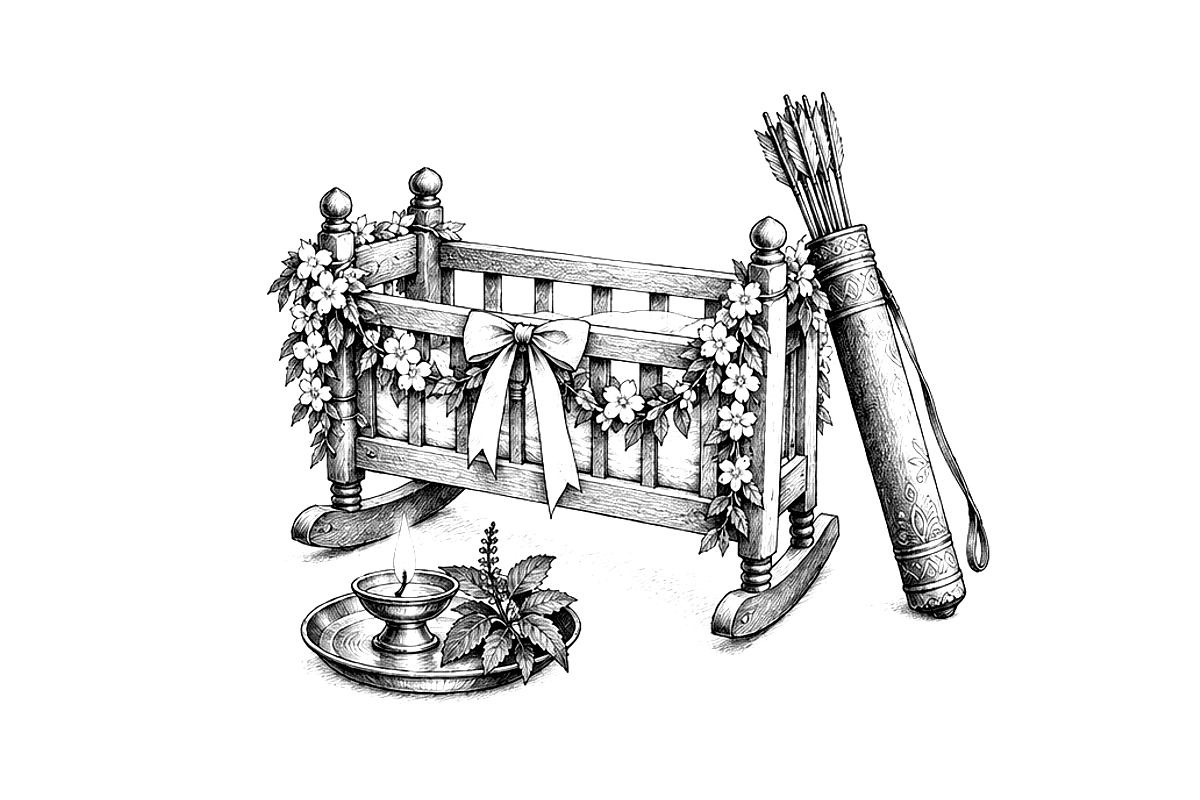
Ram Navami celebrates the birth of Rama on Chaitra Shukla Navami, the ninth day of the bright half of Chaitra, and closes Chaitra Navratri. Devotees fast, worship Rama at madhyahna (midday), the hour of his birth, rock a cradle with an image of the infant Rama, and read or listen to the Ramayana. In South India temples celebrate the Sita-Rama Kalyanam, and panakam and neer mor are offered and shared.
Significance
The Ramayana tells that Vishnu was born as Rama, son of Dasharatha and Kausalya, to free the world from Ravana. Rama is remembered as maryada purushottam, the ideal of dharma in every role of life, and his birthday is a day to renew one's commitment to truth, duty and compassion.
Puja vidhi
Ram Navami Puja
The household worship of Rama on Ram Navami, centred on the madhyahna (midday) muhurat of his birth shown in your local panchang.
Ram Navami, Chaitra Shukla Navami, at madhyahna · About 75 minutes
- 1Keep a fast from sunrise according to your ability, with fruit and milk or a single meal without grain; many complete the nine-day Chaitra Navratri fast today.
- 2Clean the home and shrine. Set up a chowki with a yellow or red cloth and place an image of the Rama Darbar: Rama, Sita, Lakshmana and Hanuman.
- 3Place a small decorated cradle beside the platform with an image of the infant Rama (Ram Lalla).
- 4Before midday, bathe, sit facing east or north, sip water three times (achamana) and take the sankalpa, stating your name, the date and place, and your intention.
- 5Worship Ganesha first with water, roli, akshat and a flower, chanting "Om Gam Ganapataye Namah".
- 6At the madhyahna muhurat, blow the conch and ring the bell to announce Rama's birth.
- 7Bathe the image of the infant Rama with panchamrit and then clean water (for a picture, sprinkle a few drops), wipe it and dress it in yellow cloth.
- 8Offer chandan, roli, akshat, yellow flowers, a garland and tulsi leaves to Rama and Sita, then to Lakshmana and Hanuman.
- 9Place the infant Rama in the cradle and rock it gently while the family sings songs of his birth. Read the birth from the Ramayana, or Tulsidas's "Bhaye pragat kripala" from the Ramcharitmanas.
- 10Offer naivedya with a tulsi leaf: panakam (jaggery water with black pepper and cardamom), kheer or panjiri, and fruits.
- 11Chant "Shri Ram Jai Ram Jai Jai Ram" 108 times, or recite the Ram Raksha Stotra if you know it.
- 12Perform the aarti with a ghee lamp while singing "Shri Ramchandra Kripalu".
- 13Offer flowers with folded hands, ask forgiveness for any mistakes, and listen to the katha. Share prasad and break the fast after the puja or as your family custom holds.
Worship at midday re-enacts the joy of Ayodhya at Rama's birth. Rocking the cradle and singing to the infant Rama invites the Lord into the home as a beloved child, while the reading and the name of Rama keep his example of dharma before the family.
Puja samagri
- Chowki (low platform) with a yellow or red cloth
- Image of the Rama Darbar, and of the infant Rama
- Small cradle (palna) with flowers
- Panchamrit: milk, curd, ghee, honey and sugar
- Yellow cloth for the deity
- Roli, chandan and akshat
- Yellow flowers and a garland
- Tulsi leaves
- Ghee lamp, incense sticks and camphor
- Jaggery, black pepper and cardamom for panakam
- Kheer or panjiri, and fresh fruits
- Conch and bell
- Ramayana or Ramcharitmanas for reading