
Festival
Sharad Navratri
शारदीय नवरात्रि
Shukla paksha Pratipada of Ashvina.
Sharad Navratri dates
- 2026
- 11 October to Tuesday, 20 October 2026
- 2027
- 30 September to Saturday, 9 October 2027
Dates for Delhi. A tithi can begin and end at different times in different places, so a festival can fall a day apart; the panchang for your city shows the tithi day by day.
About Sharad Navratri
Sharad Navratri runs for nine nights from the Pratipada to the Navami of the bright fortnight of Ashvina, in September or October, and is followed by Vijayadashami (Dussehra). Homes install the kalash and worship the nine forms of Durga with fasting and recitation of the Devi Mahatmya; Gujarat dances Garba and Dandiya, Bengal celebrates Durga Puja from Shashthi to Dashami, and South India arranges Golu dolls and keeps Ayudha Puja and Saraswati Puja on the last days.
Significance
The autumn Navratri celebrates the victory of the Goddess over Mahishasura, as told in the Devi Mahatmya, and the worship Rama offered her before his battle with Ravana. It is the greatest festival of the Goddess, honouring her as Durga who protects, Lakshmi who sustains and Saraswati who enlightens.
Puja vidhi
Sharad Navratri Ghatasthapana
The installing of the kalash on the first morning of Sharad Navratri, at the Ghatasthapana muhurat given in your local panchang, and the daily household worship of the Goddess through the nine nights to Vijayadashami. Regional customs differ widely; follow your family's.
Sharad Navratri, from Ashvina Shukla Pratipada (Ghatasthapana) to Navami, ending on Vijayadashami · About 60 minutes
- 1On Pratipada, bathe early and clean the place of worship. Do Ghatasthapana within the muhurat given in your panchang, avoiding the inauspicious periods it lists.
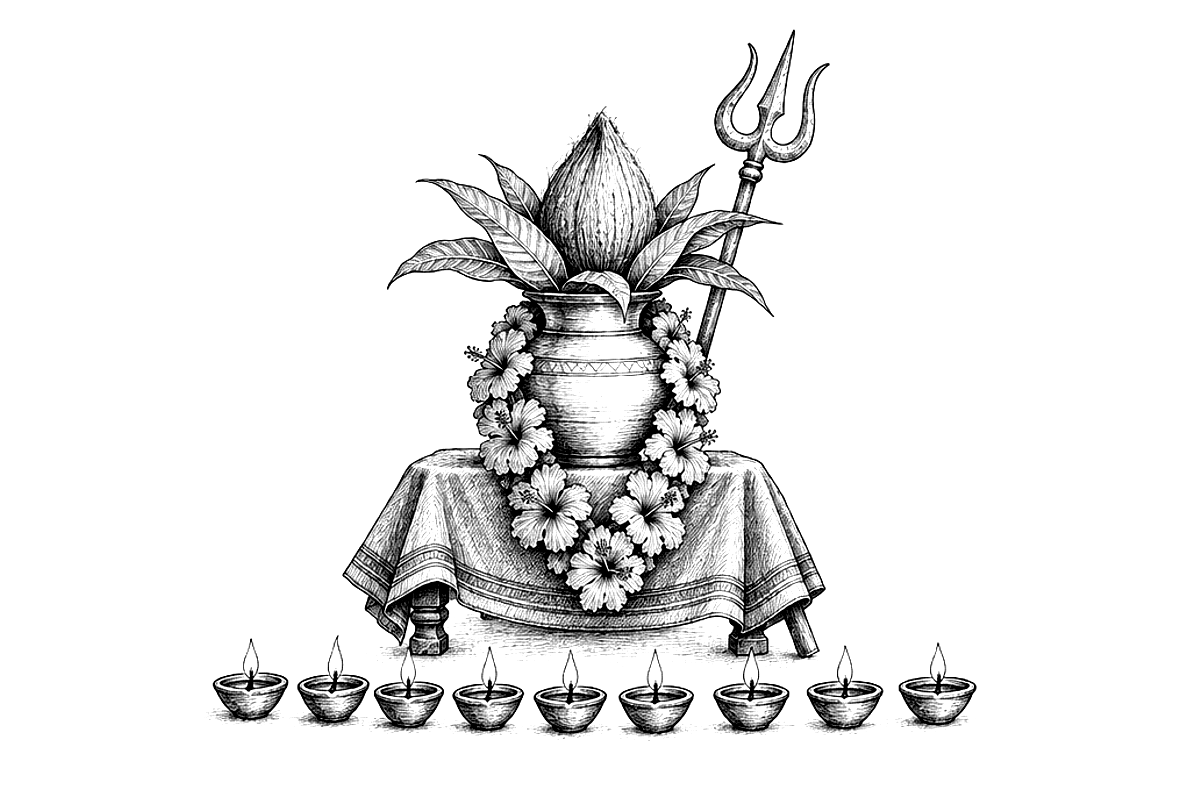
- 2Sow barley in a tray of clean soil, and set beside it a kalash filled with water and Ganga jal, holding a coin, betel nut, akshat and durva, with mango leaves at the mouth and a coconut wrapped in red cloth on top.
- 3Place the image of Durga on a red-covered chowki. Light a ghee lamp, and keep it burning through the nine days if your family keeps the akhand jyoti.
- 4Sip water three times (achamana) and take the sankalpa for the nine nights and for the fast you will keep.
- 5Worship Ganesha first, then the kalash, and then the Goddess with water, a red chunri, sindoor, kumkum, akshat, red flowers, shringar items, fruit and sweets.
- 6Each day, worship the form of the day, from Shailaputri on the first day to Siddhidatri on the ninth, and offer the flower or colour your tradition associates with that day.
- 7Each day, recite part of the Durga Saptashati, or the Durga Chalisa, and perform aarti morning and evening, "Jai Ganesh Deva" and then "Jai Ambe Gauri". Read or listen to the Sharad Navratri katha.
- 8Keep the fast as you have vowed: fruit and milk, one meal of fasting foods such as kuttu, singhara and sabudana, or fasting only on the first and last days. Avoid grains, onion and garlic during the fast.
- 9In the evenings, join the community worship of your region: Garba and Dandiya around the Goddess in Gujarat, pandal darshan and aarti in Bengal, or visiting homes to see the Golu and share sundal in the South.
- 10On Ashtami or Navami, as your family does, honour young girls in Kanya Puja with washed feet, a meal of puri, chana and halwa, and gifts.
- 11On Navami, many offer a havan; in South India, books and tools are worshipped for Saraswati Puja and Ayudha Puja and are not used until Vijayadashami.
- 12On Vijayadashami, worship the Goddess once more, offer the jaware, and immerse or respectfully set aside the kalash and jaware. Break the fast, take the books and tools back up, and begin new work, for it is one of the most auspicious days of the year.
For nine nights the home becomes the Goddess's temple: the kalash holds her presence, the lamp her light, and the fast and recitation prepare the mind for her grace. The festival ends on Vijayadashami, the day of victory, when good is held to triumph over evil.
Puja samagri
- Tray of clean soil and barley seeds
- Kalash, mango leaves, coconut, coin and betel nut
- Chowki with a red cloth, and an image of Durga
- Red chunri and the items of shringar
- Roli, kumkum, sindoor and akshat (unbroken rice)
- Mauli (sacred red thread)
- Red flowers and a garland
- Durva grass for Ganesha
- Ghee, wicks and a lamp for the akhand jyoti
- Incense and camphor
- Fruits, sweets and fasting foods
- Durga Saptashati or Durga Chalisa
- Puri, chana and halwa, and small gifts for Kanya Puja
- Havan kund, samagri and ghee, if a havan is done
Aartis and kathas
All festivalsPanchang for September 2027Every aarti and katha