
Festival
Ugadi / Gudi Padwa
युगादि / गुढी पाडवा
Shukla paksha Pratipada of Chaitra.
Ugadi / Gudi Padwa dates
- 2026
- Thursday, 19 March 2026
- 2027
- Wednesday, 7 April 2027
Dates for Delhi. A tithi can begin and end at different times in different places, so a festival can fall a day apart; the panchang for your city shows the tithi day by day.
About Ugadi / Gudi Padwa
Ugadi and Gudi Padwa mark the new year on the Pratipada (first day) of the bright fortnight of Chaitra, in March or April, the same day Chaitra Navratri begins. In Karnataka, Andhra Pradesh and Telangana it is Ugadi, with an oil bath, new clothes, Ugadi pachadi and the reading of the new year's panchang; in Maharashtra and Goa it is Gudi Padwa, when a gudi is raised at every home. The same day is kept as Cheti Chand by Sindhis and Navreh in Kashmir.
Significance
Tradition holds that Brahma began creation on this day, so the year, and the counting of time itself, begin here. The gudi is a banner of victory and welcome, recalling Rama's return and Shalivahana's triumph, and the bitter-sweet first taste of the year teaches equanimity toward all it may bring.
Puja vidhi
Ugadi / Gudi Padwa Puja
The household rites of the new year on Chaitra Shukla Pratipada: the oil bath, raising and worshipping the gudi (in Maharashtra and Goa), preparing Ugadi pachadi (in the Telugu and Kannada lands), the new-year puja and the reading of the panchang. Follow the customs of your region.
Ugadi / Gudi Padwa, Chaitra Shukla Pratipada, in the morning · About 60 minutes
- 1Wake before sunrise and take an oil bath (abhyanga snan): massage the body and hair with sesame oil, then bathe. Put on new or clean clothes.
- 2Clean the home, tie a toran of mango leaves (and neem leaves, in many homes) over the main door, and draw a rangoli or muggulu at the entrance.
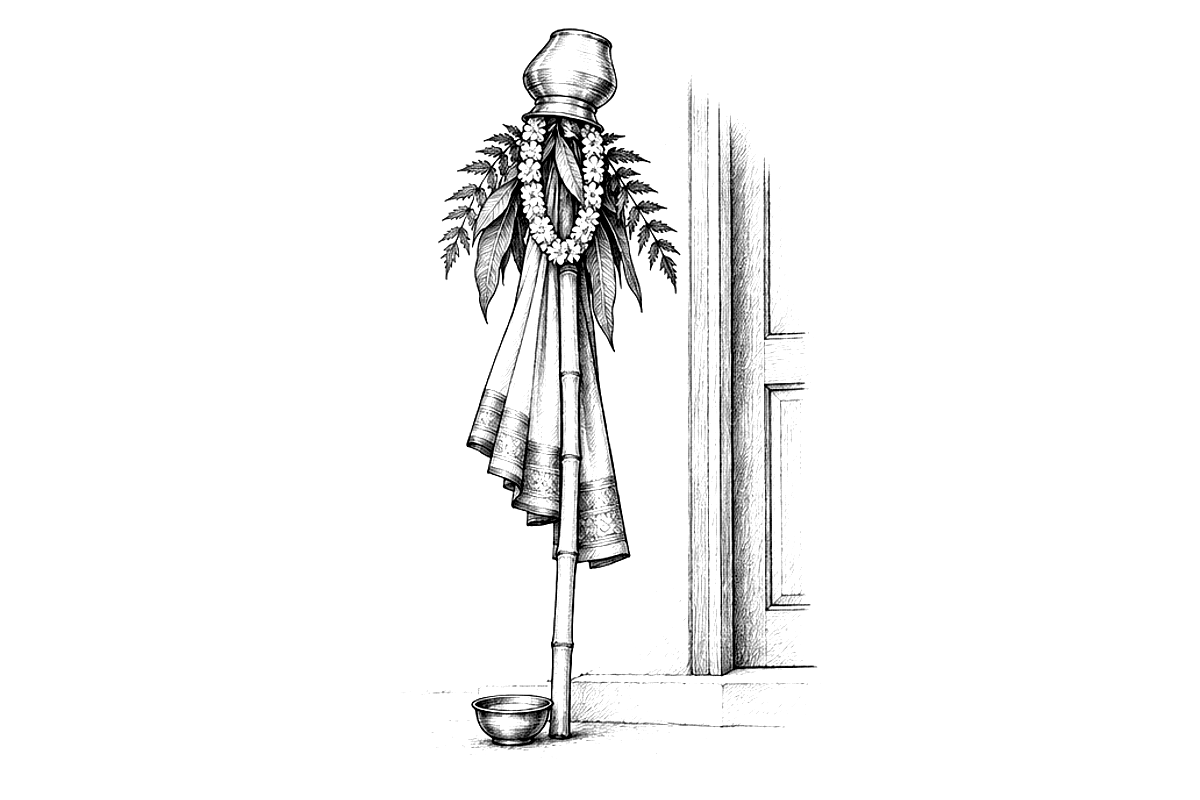
- 3To make the gudi, tie a bright new cloth, often silk with a zari border, to the top of a long bamboo staff, and add a sprig of neem, mango leaves, a garland of flowers and a garland of sugar crystals (gathi). Place a copper or silver lota upside down over the top.
- 4Raise the gudi at the right side of the main door, on a window or on the terrace, tied firmly and leaning slightly forward. Draw a rangoli at its base and mark a swastika on the staff with kumkum.
- 5Sip water three times (achamana) and take the sankalpa for the new year, naming the new samvatsara from your panchang.
- 6Worship Ganesha first, then the gudi or the family deity: offer haldi, kumkum, akshat, flowers, incense and a ghee lamp.
- 7Prepare the first taste of the year. In the Telugu and Kannada lands, make Ugadi pachadi with neem flowers, jaggery, tamarind, raw mango, chilli or pepper and salt. In Maharashtra, grind tender neem leaves with jaggery, cumin and a little tamarind.
- 8Offer the pachadi or neem-jaggery to the deity, and then have every member of the family take a little before eating anything else.
- 9Offer the festive naivedya: puran poli, shrikhand-puri, or obbattu and holige, as your family makes them. Perform the aarti, "Jai Ganesh Deva", and read or listen to the Ugadi and Gudi Padwa katha.
- 10Touch the feet of elders for their blessings, visit the temple, and share sweets with neighbours.
- 11In the evening, gather to hear the panchanga shravanam: a priest or elder reads the new year's panchang, with its forecasts for the rains, the harvest and the year ahead.
- 12Many begin new ventures or make auspicious purchases today, for it is counted among the most auspicious days of the year.
- 13Before sunset, offer haldi, kumkum and akshat to the gudi once more, take it down respectfully, and share the sugar garland as prasad.
Beginning the year with a bath, worship and a raised banner invites victory and auspiciousness into the home, and hearing the panchang places the family within the turning of time. Tasting bitter and sweet together is a quiet resolve to meet whatever the year brings with a steady mind.
Puja samagri
- Sesame oil for the oil bath
- Mango and neem leaves for the toran
- Rangoli colours
- Long bamboo staff, a new silk or bright cloth, and a copper or silver lota (for the gudi)
- Garland of flowers and a garland of sugar crystals (gathi)
- Haldi, kumkum and akshat (unbroken rice)
- Flowers, incense, ghee lamp and camphor
- Neem flowers or tender neem leaves
- Jaggery, tamarind, raw mango, chilli or pepper, and salt for Ugadi pachadi
- Festive sweets: puran poli, shrikhand or obbattu
- New clothes for the family
- The new year's panchang