
Festival
Vivah Panchami
विवाह पंचमी
Shukla paksha Panchami of Margashirsha.
Vivah Panchami dates
- 2026
- Monday, 14 December 2026
- 2027
- Friday, 3 December 2027
Dates for Delhi. A tithi can begin and end at different times in different places, so a festival can fall a day apart; the panchang for your city shows the tithi day by day.
About Vivah Panchami
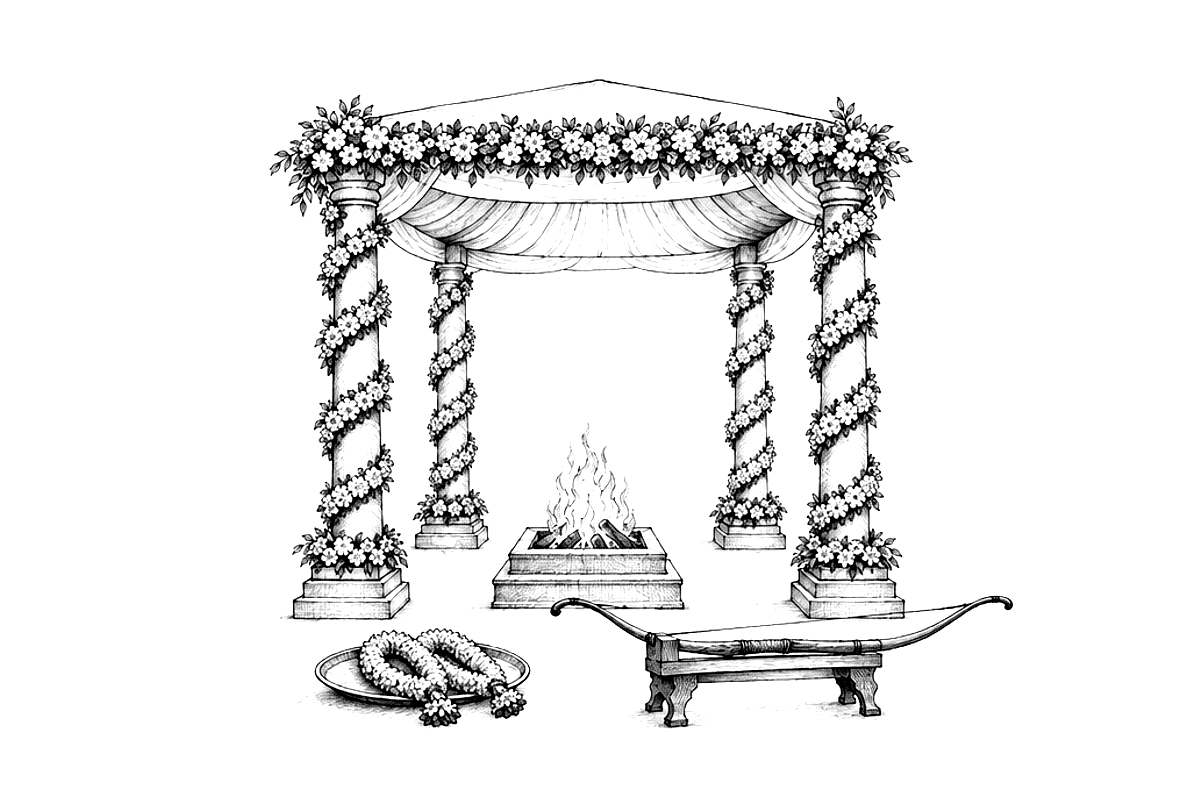
Vivah Panchami, on Shukla Panchami of Margashirsha, celebrates the wedding of Rama and Sita. It is kept with great joy in Janakpur in Nepal, across Mithila and in Ayodhya, where temples re-enact the wedding with processions and songs; at home, families worship Sita and Rama together, read the wedding episode from the Balakanda of the Ramayana or the Ramcharitmanas, and sing wedding songs.
Significance
The wedding of Rama and Sita is remembered as the union of dharma and devotion, and as a model of love, respect and faithfulness that endured every trial. Couples pray for harmony in married life and the unmarried for a good match; in parts of Mithila, families avoid fixing their own daughters' weddings on this day, remembering the hardships Sita later bore.
Puja vidhi
Vivah Panchami Puja
The household worship of Sita and Rama on Vivah Panchami, celebrating their wedding with garlands, the gathbandhan, readings from the Ramayana and wedding songs.
Vivah Panchami, Margashirsha Shukla Panchami, morning or evening · About 60 minutes
- 1Bathe, wear clean clothes and take the sankalpa for the puja.
- 2Clean the place of worship, draw a rangoli, and set up a chowki covered with a red or yellow cloth.
- 3Place images of Sita and Rama together on the chowki, or a picture of the Ram Darbar.
- 4Place a kalash of water with mango leaves and a coconut, and worship Ganesha first with roli, akshat, durva and a sweet.
- 5Offer water to Sita and Rama, and dress them: a yellow cloth for Rama, and a red chunri with bangles, sindoor and bindi for Sita.
- 6Offer sandalwood paste, roli, akshat and flowers to both, and tulsi leaves to Rama.
- 7Place a garland on each, as in the exchange of garlands at a wedding.
- 8Join their cloths with mauli, or tie the end of Sita's chunri to Rama's cloth, for the gathbandhan.
- 9Light a ghee lamp and incense.
- 10Read the wedding of Rama and Sita from the Balakanda, from the breaking of Shiva's bow to the wedding rites, or chant "Sita Ram" with the family.
- 11Sing wedding songs; in Mithila homes the women sing the traditional vivah geet.
- 12Offer naivedya of kheer, fruits, sweets and panchamrit with tulsi, and perform the aarti with the lamp.
- 13Read or listen to the Vivah Panchami katha and share the prasad with family and neighbours.
Celebrating the wedding of Sita and Rama as if it were the family's own brings their example into the home: love grounded in dharma, and faithfulness that does not waver in hardship.
Puja samagri
- Images of Sita and Rama, or a picture of the Ram Darbar
- Chowki with a red or yellow cloth
- Kalash, mango leaves and a coconut
- Yellow cloth for Rama
- Red chunri and shringar items for Sita: bangles, sindoor and bindi
- Two flower garlands
- Mauli (sacred red thread)
- Roli, haldi, sandalwood paste and akshat (unbroken rice)
- Tulsi leaves, and durva grass for Ganesha
- Ghee lamp, cotton wicks, incense sticks and camphor
- Panchamrit: milk, curd, ghee, honey and sugar
- Kheer, fruits and sweets
- Betel leaves and supari
- A copy of the Ramayana or the Ramcharitmanas
Aartis and kathas
All festivalsPanchang for December 2026Every aarti and katha